

That first step out of bed shouldn’t be the worst part of your morning.
But for people with plantar fasciitis, it often is.
You put your foot on the floor and immediately feel a sharp or stabbing pain underneath your heel. After walking around for a few minutes, it may loosen up and feel better. Then you sit at your desk, get back up and the pain returns.
Some people deal with this cycle for months.
At New Jersey Health & Performance Institute, we regularly see patients who have tried changing shoes, stretching their feet, rolling on a frozen water bottle, buying inserts or simply waiting for the problem to go away.
Sometimes those approaches help. Sometimes they don’t.
One reason is that plantar fasciitis and foot pain aren’t always just foot problems.
As chiropractors in East Brunswick, NJ, we focus on determining why the plantar fascia became overloaded in the first place.
Is your ankle moving properly? Are your calf muscles excessively tight? Is your foot absorbing force effectively? Are your hips controlling your leg when you walk or run? Did your training volume suddenly increase? Are your shoes contributing? Has your gait changed?
Instead of focusing exclusively on where it hurts, we look at the entire system influencing your foot.
That’s an important distinction because long-term plantar fasciitis treatment isn’t simply about making the bottom of your foot hurt less.
It’s about helping your foot tolerate normal activity again.
What Is Plantar Fasciitis?
The plantar fascia is a strong band of connective tissue that runs along the bottom of your foot from your heel toward your toes.
It helps support the arch of your foot and plays an important role in walking and running.
Every time you take a step, your plantar fascia helps your foot manage and transfer force.
When the tissue becomes repeatedly overloaded, small amounts of tissue damage and irritation can develop. That’s what we commonly call plantar fasciitis.
Despite the “-itis” in the name, chronic plantar fasciitis isn’t always simply an inflammatory condition. In longer-lasting cases, degenerative changes within the plantar fascia can be an important part of the problem.
This helps explain why continually trying to “reduce inflammation” doesn’t necessarily solve chronic plantar fasciitis.
The tissue may need something different: improved mobility, better mechanics and progressively increased capacity to tolerate load.
What Does Plantar Fasciitis Feel Like?
The classic symptom is heel pain, usually near the inside or bottom of the heel.
Many patients tell us their first few steps in the morning are particularly painful.
The foot may loosen up after walking for a while, but symptoms can return after prolonged standing, exercise or getting up after sitting.
Some patients describe stabbing pain. Others experience an ache, burning sensation or tenderness along the bottom of the foot.
And not every case of heel pain is plantar fasciitis.
Stress fractures, nerve problems, Achilles tendon problems and other conditions can produce similar symptoms. That’s one reason an examination is important when foot pain persists.
Why Is Plantar Fasciitis So Common?
Plantar fasciitis is common because your feet absorb the force of thousands of steps a day, and problems start when that stress exceeds what the tissue can currently tolerate.
Think about how much work your feet do.
For most people, they absorb thousands of steps every day.
Every one of those steps creates force that has to travel through your foot, ankle, knee, hip and eventually the rest of your body.
Normally, that’s not a problem. The human body is remarkably good at adapting to stress.
Problems tend to occur when the amount of stress exceeds the tissue’s current ability to tolerate it.
Maybe you suddenly started running more.
Maybe you changed jobs and now spend eight hours standing.
Maybe you started playing pickleball several times a week after being relatively inactive.
Maybe your ankle has gradually become less mobile.
Or maybe several smaller factors have accumulated over time.
Eventually, the plantar fascia starts complaining.
The Chiropractic Approach to Plantar Fasciitis
When people hear “chiropractor,” they usually think about the spine.
But your musculoskeletal system doesn’t stop at your lower back.
Your hips, knees, ankles and feet are all interconnected.
At New Jersey Health & Performance Institute, we don’t treat plantar fasciitis by assuming that adjusting something will magically make heel pain disappear.
We evaluate the entire lower extremity.
When joint restrictions are contributing to abnormal mechanics, chiropractic treatment or mobilization may be useful.
When strength is the problem, we address strength.
When soft-tissue restrictions are contributing, we address those.
And when another treatment or medical evaluation is appropriate, we’ll tell you.
That integrated approach is particularly useful for plantar fasciitis because the condition is rarely solved by focusing on one structure alone.
$99 New Patient Special
Includes In-Depth Consultation, Thorough Physical Examination, Comprehensive Review of Findings, Treatment Plan for Full Recovery & Start Treatment on Same Day
How Our Care Plan Works
Start Better
Your journey begins with a thorough evaluation and personalized plan. We identify the root causes of pain or dysfunction, correct biomechanical imbalances, and set clear goals. Starting better means building a strong foundation for recovery, ensuring every treatment is purposeful and tailored to your unique needs.
Feel Better
Once we address the underlying issues, patients experience relief and improved comfort quickly. Through chiropractic adjustments, physical therapy, and acupuncture, we reduce pain, restore mobility, and improve function. Feeling better is about regaining energy and confidence, so everyday activities are easier and life feels more manageable.
Stay Better
Sustained results require ongoing support and proactive strategies. We teach corrective exercises, posture habits, and lifestyle guidance to prevent recurrence. Staying better ensures long-term health, maintaining mobility and reducing pain flare-ups, so patients continue thriving well after the intensive treatment plan ends.
Perform Better
Our ultimate goal is helping patients achieve peak function in daily life, work, and athletics. Performance improvement includes enhanced strength, flexibility, endurance, and overall wellbeing. Performing better means not just living without pain, but moving, working, and playing at your full potential with confidence and resilience
How We Treat Plantar Fasciitis in East Brunswick, NJ
Our treatment philosophy at New Jersey Health & Performance Institute follows a progression:
Start Better. Feel Better. Stay Better. Perform Better.
First, we determine what’s wrong.
Then we reduce symptoms and restore normal movement.
Next, we build enough strength and resilience to reduce the likelihood of recurrence.
Finally, we help you return to walking, running, exercising, working or whatever activity matters to you.
Comprehensive Consultation and Exam
Treatment starts with listening.
We want to know where your foot hurts, when the symptoms started and what makes them better or worse.
Is your heel painful first thing in the morning?
Does it hurt after running?
Do symptoms increase after standing at work?
Did you recently increase your exercise?
Have you changed shoes?
Have you experienced previous foot or ankle injuries?
Then we examine you.
We may evaluate foot and ankle mobility, tenderness, calf flexibility, strength, balance, gait and lower-extremity mechanics.
Depending on what we find, we may also evaluate your knees, hips, pelvis and lower back.
That’s because finding the painful tissue is only part of the diagnosis.
We also want to answer:
Why is that tissue being overloaded?
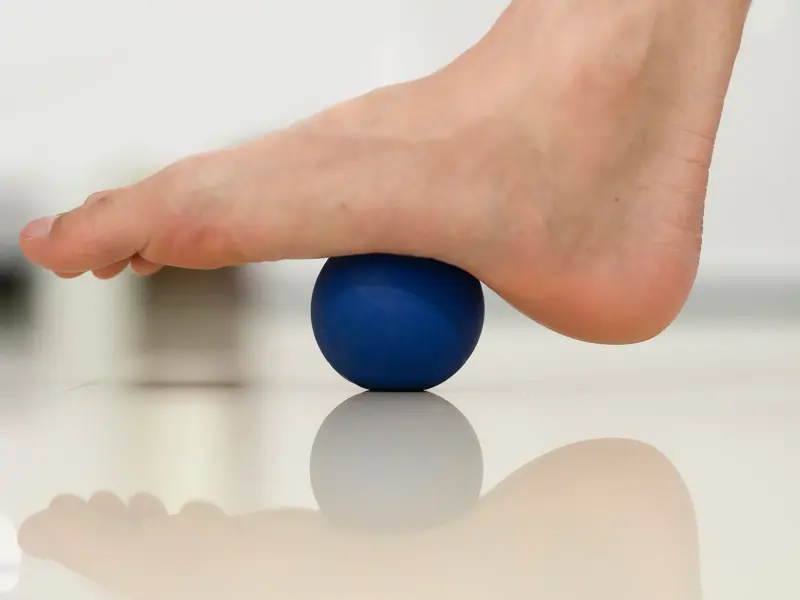
Specific Chiropractic Care in East Brunswick, NJ
The traditional chiropractic term “subluxation” is often used to describe altered joint function or restricted movement.
For plantar fasciitis, we’re particularly interested in whether joints throughout the lower extremity are moving appropriately.
Your ankle needs adequate motion when you walk.
Your foot contains numerous joints that must work together to absorb and transfer force.
Your hip needs to control the position of your leg.
Restrictions within this system can sometimes alter how stress reaches the plantar fascia.
When appropriate, chiropractic adjustments or joint mobilization may be used to improve mobility and movement.
That doesn’t mean every patient with plantar fasciitis needs the same adjustments.
Treatment should be based on what we find during your examination.
And chiropractic care is usually one component of the plan—not the entire plan.
Custom Therapeutic Exercise Plan
If we want a long-term solution, exercise is extremely important.
Why? Eventually, your foot has to tolerate load again.
You can’t manually treat your way into a stronger calf or a more resilient foot.
Therapeutic exercises may focus on calf strength, foot strength, ankle mobility, balance and hip stability.
Depending on the individual, we may use exercises such as calf raises, controlled foot-strengthening movements, calf mobility exercises, balance training and progressive lower-extremity strengthening.
The exact exercises matter less than the reason we’re prescribing them.
We’re trying to improve your body’s capacity.
If walking two miles currently irritates your plantar fascia, our goal isn’t to tell you never to walk two miles again.
Our goal is to progressively build your foot and lower extremity until they can handle the activities you want to perform.
Soft Tissue Work
Soft-tissue treatment can be another useful part of plantar fasciitis treatment.
We may address the plantar fascia itself as well as muscles and connective tissues in the calf and surrounding lower extremity.
Manual techniques can help improve mobility and reduce restrictions that may be contributing to symptoms.
But there’s an important distinction.
We’re not simply trying to “break up scar tissue.”
Soft-tissue treatment works best as part of a larger plan.
If manual therapy helps improve your mobility, we want to reinforce that improvement with appropriate movement and exercise.
That’s how passive and active treatment complement one another.
Physical Therapy and Integrated Rehabilitation
One of the advantages of receiving treatment at New Jersey Health & Performance Institute is that your care doesn’t have to fit into one box.
Some plantar fasciitis patients benefit primarily from rehabilitation.
Others benefit from a combination of chiropractic care, physical therapy, manual therapy and therapeutic exercise.
That integrated model allows us to address several components of the problem rather than expecting one technique to solve everything.
Ultimately, our goal isn’t to make you dependent on treatment.
We want your body to be capable of doing more on its own.
Why Does Plantar Fasciitis Keep Coming Back?
This is one of the most frustrating parts of the condition.
Your heel finally feels better.
You start exercising again.
Then the pain returns.
Often, this happens because symptoms improved before the tissue’s capacity improved.
Think about it this way:
Suppose your foot currently tolerates a certain amount of stress.
You rest for two weeks, and your pain decreases.
But you haven’t increased your foot’s strength or capacity.
Then you immediately return to your previous activity level.
The same demand is placed on essentially the same system.
It’s not surprising when symptoms return.
That’s why rehabilitation is so important.
We don’t simply want to reduce pain.
We want to increase what your body can handle.


Who Plantar Fasciitis Commonly Affects in East Brunswick, NJ
There usually isn’t one universal cause.
Plantar fasciitis can develop from a combination of load, mobility, strength and biomechanics.
Limited ankle mobility can alter how your foot moves during walking.
Tight calf muscles may contribute to increased stress through the foot.
Weakness in the foot, ankle or hip can change the way your lower extremity manages force.
Foot structure can play a role.
So can sudden changes in exercise volume, prolonged standing, inappropriate footwear or changes in body weight.
That’s why two people with identical heel pain may need completely different treatment plans.
Plantar Fasciitis in Runners
Runners are particularly susceptible to plantar fasciitis because running repeatedly loads the foot.
But running itself isn’t necessarily the problem.
The bigger question is whether your body is prepared for the amount of running you’re asking it to perform.
Rapidly increasing mileage, changing terrain, introducing more speed work or returning to running too aggressively after time off can overload the plantar fascia.
Mobility and strength matter too.
For runners with plantar fasciitis, we may evaluate ankle mobility, calf strength, hip stability and running-related movement patterns.
The goal isn’t automatically to stop you from running.
Depending on the severity of your symptoms, we may temporarily modify training and then gradually build your tolerance back up.
Good foot health for runners also includes sensible training progression, adequate recovery, appropriate footwear and maintaining lower-extremity strength.
Your ultimate treatment goal shouldn’t simply be:
“My foot doesn’t hurt because I stopped running.”
It should be:
“My foot is strong enough for me to run again.”

Plantar Fasciitis and Body Weight
Body weight influences how much force the foot must manage with every step.
For someone already dealing with plantar fasciitis, increased load can contribute to persistent symptoms.
But simply telling someone to “lose weight” isn’t an adequate treatment plan.
People need to move.
And foot pain can make movement difficult.
That’s why treatment may initially focus on making activity more comfortable while improving strength, mobility and tolerance.
As the foot becomes more capable, maintaining an active lifestyle becomes easier.
Plantar Fasciitis During Pregnancy
Pregnancy creates significant changes throughout the body.
Body weight changes. Posture changes. The center of gravity changes. Hormonal changes can influence connective tissues, and the feet themselves may change during pregnancy.
Together, those factors can contribute to foot and heel pain.
Treatment during pregnancy should be individualized and conservative.
When appropriate, chiropractic care, mobility work, therapeutic exercise and other conservative strategies may help manage musculoskeletal discomfort.
Our goal isn’t to “treat pregnancy.”
It’s to help the musculoskeletal system adapt as comfortably as possible to the physical changes pregnancy creates.
Plantar Fasciitis in People Who Stand All Day
You don’t have to run marathons to overload your feet.
Sometimes your job does it for you.
Healthcare workers, teachers, restaurant employees, warehouse workers, retail employees, construction workers and others who spend long periods standing or walking can experience plantar fasciitis and foot pain.
Concrete and other hard surfaces can make the problem even more noticeable.
Footwear matters, but shoes aren’t always the complete answer.
If your ankle is restricted or your lower extremity lacks adequate strength and endurance, simply purchasing a different shoe may not address the underlying issue.
We look at both.
If you spend most of the workday standing, changing positions when possible, wearing appropriate footwear and maintaining foot and calf strength can all help.
Can Flat Feet or High Arches Cause Plantar Fasciitis?
There’s no single “perfect” foot shape.
Some people naturally have higher arches. Others have flatter feet.
Both can function perfectly well.
Problems arise when your particular structure doesn’t manage the demands being placed on it effectively.
A rigid high-arched foot may absorb force differently from a flexible flat foot.
Rather than deciding that your foot “looks wrong,” we care more about how it functions.
Can your ankle move adequately?
Can your foot control load?
Do you have enough strength?
Does your foot repeatedly collapse inward during movement?
Does your gait suggest a problem elsewhere in the kinetic chain?
These questions tell us much more than simply looking at the height of your arch.
Who Is Most at Risk for Plantar Fasciitis?
Plantar fasciitis can happen to almost anyone, but certain people are more susceptible.
Runners and athletes are obvious examples because of the repetitive stress placed on their feet.
People whose jobs require prolonged standing or walking may also develop symptoms.
Changes in body weight can increase the amount of load the plantar fascia must tolerate.
Pregnancy can temporarily alter body weight, posture and lower-extremity mechanics.
Foot structure may contribute as well. Both very high arches and flatter feet can influence how forces move through the foot.
Age is another factor, although plantar fasciitis certainly isn’t limited to older adults.
The common denominator is usually stress exceeding capacity.
Our job is to figure out why.
What Happens If You Ignore Plantar Fasciitis?
Some cases improve with relatively simple changes.
Others become persistent.
One of the problems with chronic foot pain is that people naturally begin changing the way they move.
You may walk differently to avoid putting pressure on your heel. You may shift your weight toward the other leg. You might stop exercising.
Those compensations can potentially create problems elsewhere.
That’s why we don’t recommend simply accepting heel pain for months and hoping it disappears.
If your plantar fasciitis or foot pain keeps returning or is limiting your activity, it makes sense to determine what’s driving it.
Check Out Our Location Near You
317 Rues Ln #100, East Brunswick, NJ 08816
Frequently Asked Questions About Plantar Fasciitis
Can a chiropractor in East Brunswick, NJ, help plantar fasciitis?
Chiropractic care may help when joint mobility and lower-extremity mechanics are contributing to plantar fasciitis. At New Jersey Health & Performance Institute, chiropractic care can be combined with physical therapy, therapeutic exercise and manual therapy based on your individual examination.
What exercises can I do with plantar fasciitis?
Calf raises, calf mobility exercises, foot-strengthening exercises and balance work are commonly used, but the right exercises depend on your symptoms and the factors contributing to your condition.
How do I permanently get rid of plantar fasciitis?
Long-term improvement usually comes from addressing the factors overloading your foot and progressively rebuilding its ability to tolerate walking, work and exercise. There isn’t one guaranteed treatment that permanently eliminates every case.
Is foot massage good for plantar fasciitis?
Massage and soft-tissue treatment may temporarily decrease discomfort and improve mobility. For lasting improvement, they are generally more useful when combined with appropriate exercise and management of the factors contributing to the problem.
What aggravates plantar fasciitis?
Sudden increases in walking or running, prolonged standing, inadequate recovery and activities that exceed the foot’s current capacity can aggravate plantar fasciitis.
Is walking bad for plantar fasciitis?
Not necessarily. Walking is generally beneficial, but excessive walking can irritate an already sensitive plantar fascia, so the right amount depends on your current tolerance.
Do cortisone injections help plantar fasciitis?
Cortisone (corticosteroid) injections can sometimes provide short-term pain relief, but they aren’t appropriate for every patient, and repeated injections carry risks. This is a decision to discuss with an appropriate medical provider based on your individual condition.
Should I stretch plantar fasciitis?
Stretching the calf and plantar fascia can be useful for some patients, particularly when mobility restrictions are present. Stretching alone, however, may not address weakness or other mechanical factors contributing to recurring symptoms.
What shoes are best for plantar fasciitis?
There isn’t one shoe that’s best for everyone. A comfortable shoe appropriate for your foot, activity and individual mechanics is generally more important than buying a specific brand simply because it’s marketed for plantar fasciitis.
How can I prevent plantar fasciitis from getting worse?
Avoid dramatic increases in activity, maintain foot and calf strength, address mobility restrictions and don’t continually push through worsening symptoms. Persistent or recurring heel pain should be evaluated to determine what’s causing the plantar fascia to become overloaded.
Looking for Plantar Fasciitis Treatment in East Brunswick, NJ?
If you’ve been dealing with heel pain every morning, avoiding exercise because your foot hurts or repeatedly experiencing plantar fasciitis every time you become active again, it may be time to stop treating only the symptom.
At New Jersey Health & Performance Institute in East Brunswick, NJ, we want to understand why your foot hurts.
That means looking beyond the plantar fascia itself.
We evaluate the foot and ankle along with the rest of the lower extremity to identify mobility restrictions, weakness, movement problems and other factors that may be contributing to your symptoms.
Your individualized treatment plan may include chiropractic care, physical therapy, manual therapy and therapeutic exercise depending on what we find.
Our goal isn’t simply to make your heel feel better while you’re sitting in our office.
It’s to help you get back to walking, running, working, exercising and living without constantly thinking about your foot.
That’s what we mean by:
Start Better. Feel Better. Stay Better. Perform Better.
If you’re searching for a chiropractor in East Brunswick, NJ, for plantar fasciitis, heel pain or persistent foot pain, schedule an evaluation with New Jersey Health & Performance Institute.
Let’s determine what’s causing your foot pain and build a plan to get you moving again.
$99 New Patient Special
Includes In-Depth Consultation, Thorough Physical Examination, Comprehensive Review of Findings, Treatment Plan for Full Recovery & Start Treatment on Same Day