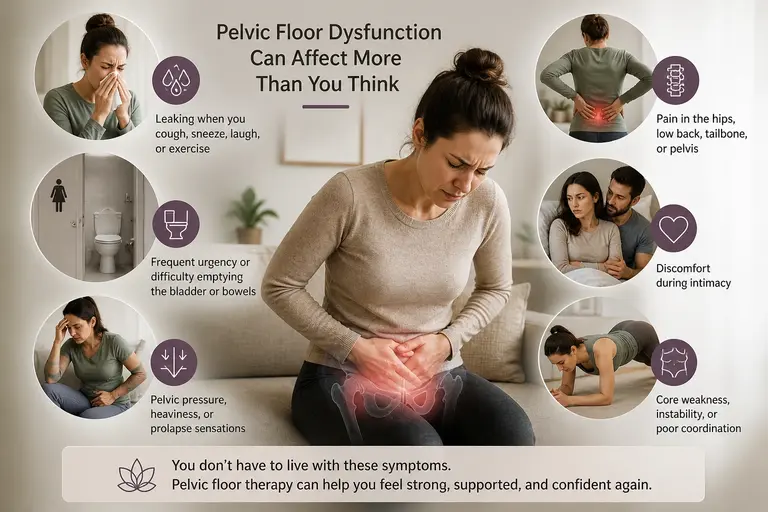
Pelvic floor therapy is a highly individualized, evidence-based approach that focuses on restoring proper muscle function, coordination, and integration with the rest of the body.
According to institutions like Johns Hopkins pelvic floor therapy overview and Mayo Clinic’s approach to treating pelvic floor dysfunction, effective pelvic floor rehabilitation goes beyond isolated exercises. It involves a comprehensive evaluation and treatment plan that addresses how your entire system works together.
Step 1: Comprehensive Assessment
Your therapy begins with a detailed evaluation that may include:
- Breathing patterns and diaphragm function
- Core muscle coordination
- Posture and alignment
- Movement mechanics (walking, squatting, lifting, etc.)
- Pelvic floor muscle function (external and/or internal assessment, if appropriate and consented)
This step is essential for identifying the true source of dysfunction—not just the symptoms.
Step 2: Personalized Treatment Plan
Based on your assessment, a customized plan is developed to meet your specific needs. Treatment may include:
- Muscle retraining – strengthening weak muscles or relaxing overactive ones
- Manual therapy – hands-on techniques to reduce tension and improve mobility
- Breathing and pressure control – improving coordination between the diaphragm and pelvic floor
- Core integration – restoring connection between your deep core muscles
- Movement retraining – correcting patterns that contribute to symptoms
Importantly, therapy is always tailored to your comfort level. Internal techniques are optional, not required.
Step 3: Building Long-Term Results
The focus isn’t just short-term relief—it’s long-term function.
By addressing the root cause, pelvic floor therapy helps retrain your body to move and function efficiently in everyday life. This leads to sustainable improvements rather than temporary fixes. Advanced care models, such as those outlined in recent treatment algorithms for pelvic floor dysfunction and UPMC’s pelvic floor therapy services overview, emphasize this whole-body, long-term approach.
What Most People Notice
With consistent therapy, many people experience:
- Improved bladder and bowel control
- Reduced leaking and urgency
- Less pain, pressure, or discomfort
- A stronger, more connected core
- Better posture and movement confidence
- Enhanced athletic performance
Ultimately, pelvic floor therapy helps you feel more in control of your body again—so you can return to the activities you enjoy without hesitation.